

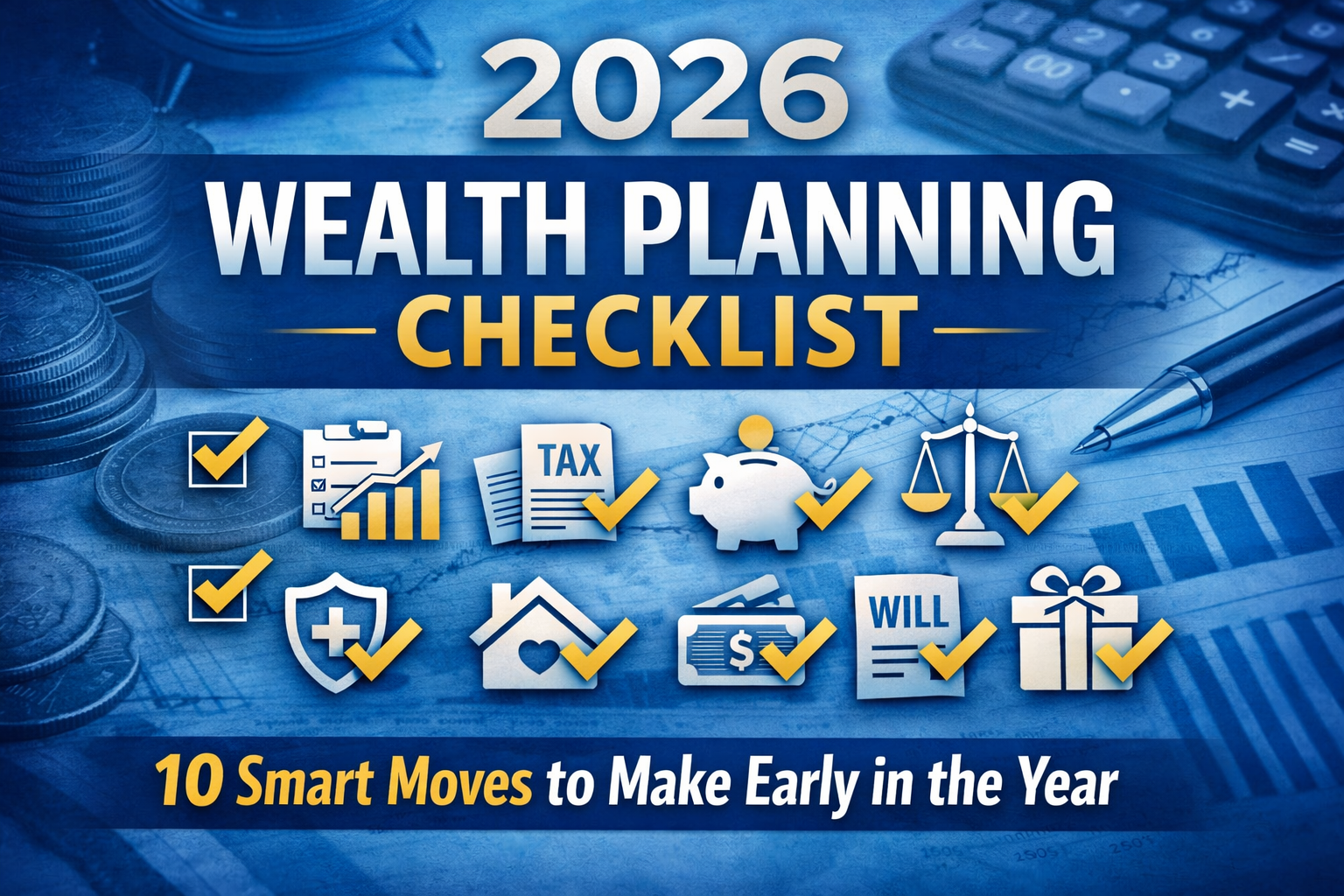
2026 Wealth Planning Checklist: 10 Smart Moves to Make Early in the Year
The best financial plans aren’t built in one big moment—they’re built through small, consistent decisions made at the right times.
If you want a simple way to start 2026 strong, here are 10 smart moves worth checking early in the year:
- Clarify your priorities. Define what “enough” looks like for your lifestyle, timeline, and legacy goals.
- Use last year’s tax return as a roadmap. Identify planning opportunities and potential surprises early.
- Set a proactive tax strategy. Consider harvesting gains/losses, Roth conversion analysis, charitable planning, and withholding/estimates.
- Align your portfolio to your plan. Rebalance if needed and address concentrated positions or unnecessary complexity.
- Strengthen your liquidity plan. Keep the right amount of cash for near-term needs without overdoing it.
- Update contributions and benefits. Confirm retirement plan elections, capture match opportunities, and review HSA strategy if eligible.
- Review protection planning. Umbrella liability, home/auto limits, disability/life coverage—make sure coverage matches your life today.
- Check estate alignment. Ensure documents, beneficiaries, account titling, and key decision-makers are current.
- Give intentionally. Consider more tax-efficient giving strategies, including appreciated securities or donor-advised funds.
- Set a planning cadence. A Q1 review, mid-year check-in, and Q4 tax meeting can reduce stress and improve results.
A simple next step: If you’d like, we can walk through these items and identify which moves matter most for your family in 2026.
Disclosure: This material is for informational and educational purposes only and should not be construed as personalized investment, tax, or legal advice. Investing involves risk, including the possible loss of principal. Past performance is not indicative of future results. Consult with your advisor, CPA, and attorney regarding your specific situation.